


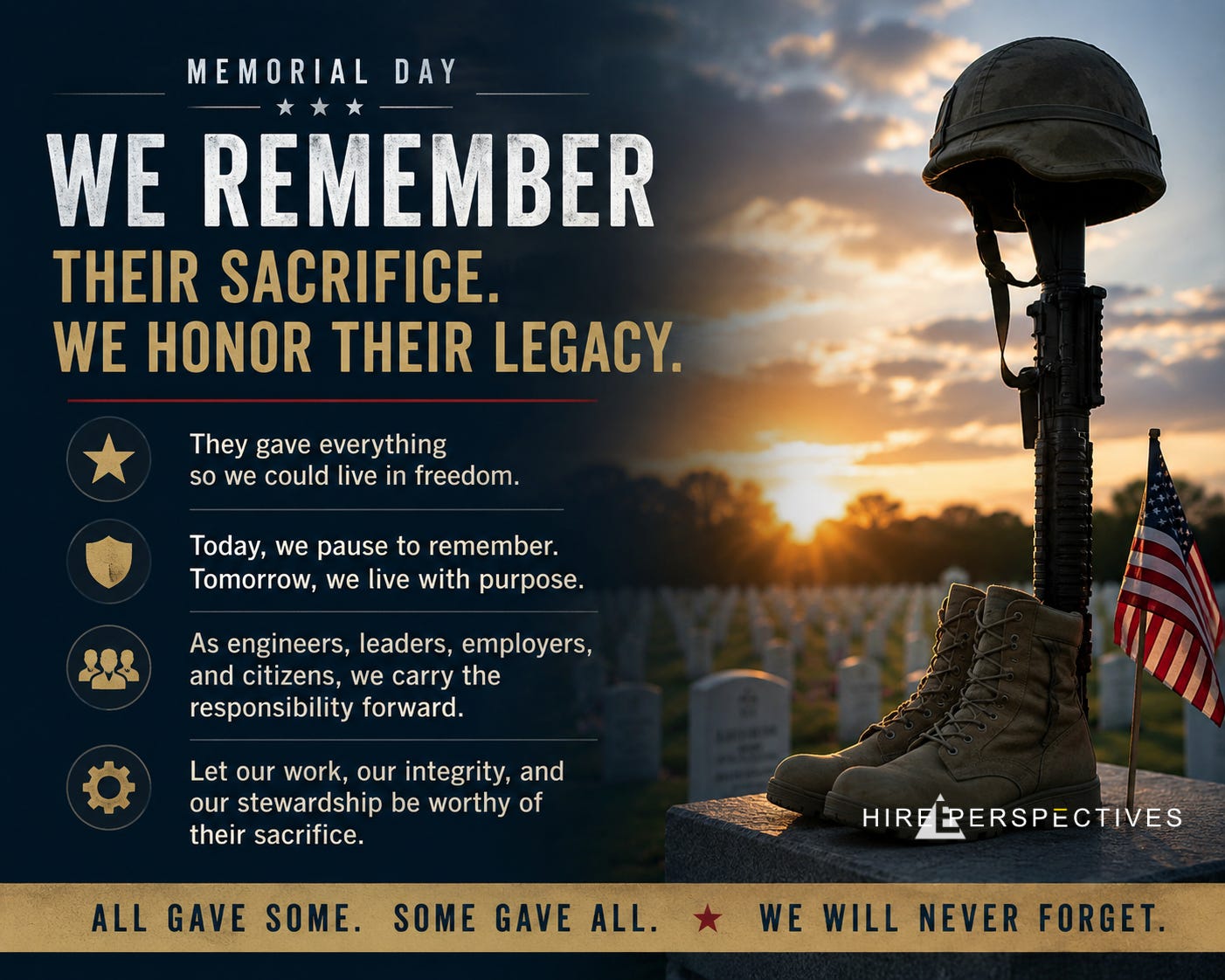
It is the day a nation is forced, if only briefly, to remember that freedom was not secured by slogans, ceremonies, or sentiment. It was secured by men and women who gave their lives in service, and by families who absorbed losses that can never be fully explained away by language as clean as honor, duty, or sacrifice. Those words matter, but they do not erase absence. They do not refill the chair at the table. They do not restore the years that were never lived.
A serious society does not only pause to remember the fallen. It also allows remembrance to place a demand on the living. That is the harder part. Mourning is one thing. Stewardship is another. Gratitude is easy to claim in public. It is much harder to prove in private through the way a person works, leads, hires, builds, and carries responsibility.
A great many people live inside systems of safety, order, and opportunity without seriously considering the cost structure beneath them. They inherit stability and quickly begin treating it as normal. They inherit freedom and begin using it carelessly. They inherit institutional continuity and rarely ask what kind of sacrifice made that continuity possible. Memorial Day interrupts that forgetfulness. It reminds the living that what they are standing inside was paid for at a price they did not personally bear.
That recognition should do more than create emotion. It should create weight. The engineer should feel that weight. The employer should feel it. The leader should feel it. The citizen should feel it. The question is not merely whether one is grateful. The question is whether one is living in a way that proves worthy of what was given.
Somewhere in America today, a veteran is still carrying memories that do not fit cleanly into conversation. Somewhere else, a parent or spouse is living with a loss that has outlasted every public ceremony attached to it. Somewhere, the cost of service remains painfully present while the rest of the country moves on to sales, travel, and long weekend plans. That contrast should disturb us more than it usually does.
A nation that forgets sacrifice eventually cheapens responsibility. A company that praises service while operating without integrity misunderstands the very thing it claims to honor. A professional who speaks reverently about courage but lives carelessly under the freedoms secured by courage is still living superficially. Memorial Day is not merely about memory. It is about moral proportion. It is about seeing cost clearly enough that one’s own life begins to come under higher scrutiny.
That is especially important in engineering. Engineering is not performance. It is consequence. It affects safety, infrastructure, systems, lives, and futures. It is one of the professions where seriousness should already be native, because the work touches real people in real ways. When Memorial Day arrives, the engineer should not merely wave at the idea of sacrifice. The engineer should ask whether he or she is building with enough integrity, enough discipline, and enough respect for consequence to justify the trust society continues to extend.
The same is true for employers. A company cannot meaningfully honor sacrifice while treating people as disposable, leadership as cosmetic, and duty as a branding theme. The employers worth respecting are those that understand stewardship, accountability, clarity, and long horizon responsibility. They do not merely use the language of service. They build organizations where responsibility is carried seriously, where people are formed well, and where the work itself is governed by standards that respect the lives affected by it.
This is also where veterans deserve more than vague appreciation.
Many veterans carry exactly the qualities employers claim to want. Discipline under pressure. Mission focus. Calm in ambiguity. Team first execution. Endurance. Accountability. A seriousness about consequences. Yet many organizations still struggle to translate military experience into usable market language, or worse, they flatten veterans into symbolic hires instead of seeing them as deeply valuable professionals. That failure is not only a hiring problem. It is a failure of interpretation.
A serious Memorial Day perspective should not stop at thanking veterans for service. It should ask whether the market is creating real pathways for them to build meaningful second chapters. It should ask whether employers actually know how to recognize disciplined capability when it stands in front of them. It should ask whether society is content with symbolic respect while leaving practical integration half finished.
The living owe more than applause.
We owe seriousness in how we work. We owe seriousness in how we lead. We owe seriousness in how we evaluate sacrifice, freedom, responsibility, and opportunity.
We owe seriousness in how they treat those who served and those who paid the cost of service.
That is why Memorial Day matters. It strips away abstraction. It reminds the living that there are things more important than comfort, preference, and self expression. It reminds them that duty is real, loss is real, and inheritance carries obligation.
A healthy nation needs that reminder. So do its institutions. So do its professionals.
The highest use of this day is not sentimentality. It is moral recalibration. It is allowing remembrance to make us more sober, more grateful, and more accountable. It is choosing to live with greater integrity because others gave more than we can ever repay.
For the engineer, that means building with seriousness. For the employer, that means leading with stewardship. For the citizen, that means refusing to cheapen what was purchased at so high a cost.
Memorial Day does not ask the living to perform gratitude. It asks them to become worthy of inheritance.
Very respectfully,
James Beine
#MemorialDay #Veterans #Leadership #EngineeringMindset #Responsibility #Stewardship #HirePerspectives
