


A hiring manager says the role has been open too long. HR says the market is difficult. Finance is watching cost. The engineering team is carrying the vacancy. Recruiters are being asked for more candidates. Leadership wants to know why the search has not produced the right person yet.
Everyone is looking at the same open role, but they are often measuring the wrong problem.
The company may think it has a sourcing problem when it actually has a role clarity problem. It may think candidates are not responding when the market signal is weak. It may think the recruiter is slow when the hiring manager is taking too long to give feedback. It may think compensation is competitive because it fits an internal band, while the market has already moved. It may celebrate filling the role, only to discover six months later that the hire did not solve the original business problem.
This is why engineering talent acquisition needs better metrics.
This article also includes practical actions and outcomes for each metric. The point is not to create another dashboard for leadership to admire. The point is to help employers see what each metric reveals, why it matters, and what they can actually do to improve the hiring system before the next search breaks in the same place.
Time to Fill matters, but it is not enough. A company can fill a role quickly and still make the wrong hire. A company can take too long to fill a role because the search was difficult, but it can also take too long because the role was unclear, the process was slow, the compensation was misaligned, or no one had real authority to make a decision. Time to Fill tells you how long the seat was open. It does not tell you whether the employer was ready, whether the market understood the opportunity, whether the candidates were serious, whether the fit was two-sided, or whether the engineer created meaningful value after starting.
Engineering talent acquisition is not generic hiring. It is a precision system. The right metrics should measure role formation, market signal, candidate quality, process discipline, two-sided fit, cost, offer strength, and post-hire impact. A top employer should know not only whether a role was filled, but whether the hiring system was worthy of the engineer it was trying to attract.
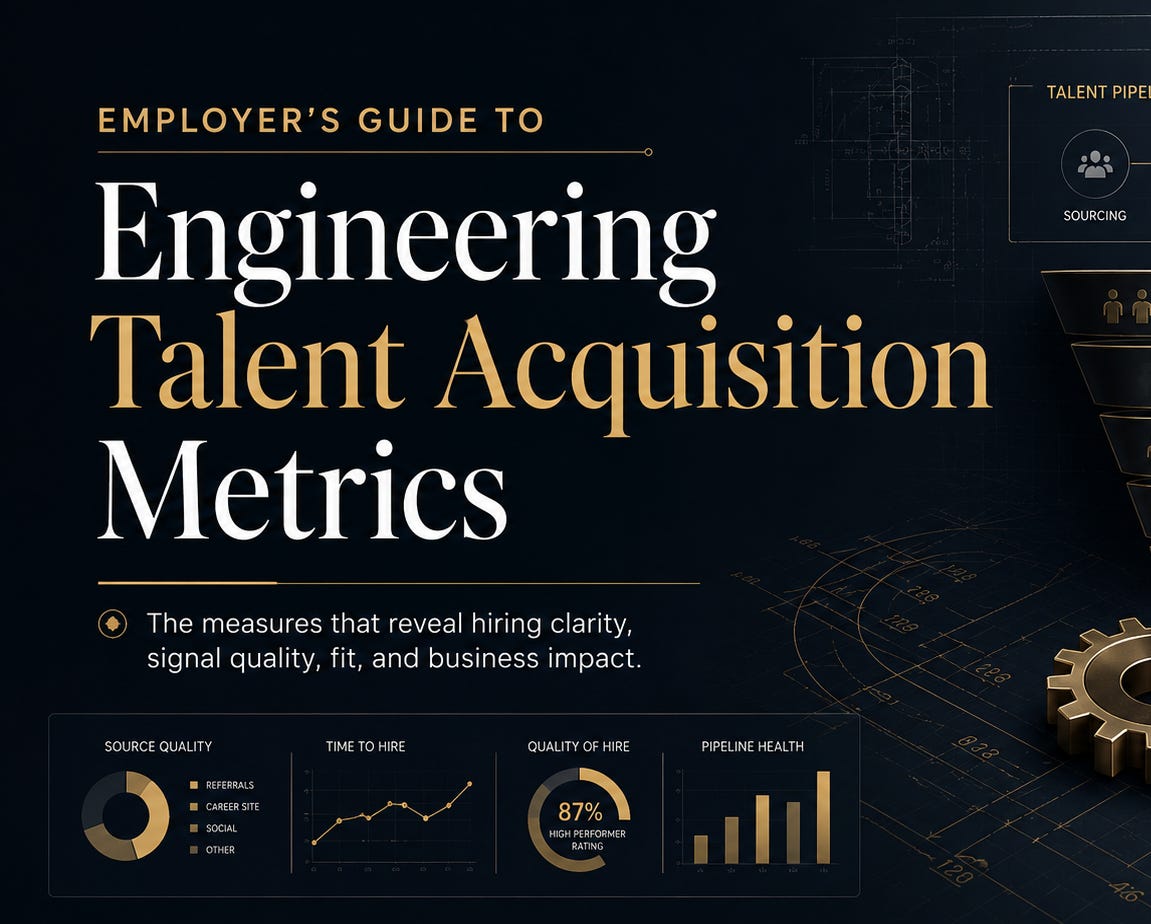
This guide introduces a practical scorecard for engineering employers. The purpose is not measurement theater. The purpose is clarity. If a metric does not help an employer make a better hiring decision, remove friction, improve fit, reduce cost, or understand outcome quality, it does not belong at the center of the scorecard.
