


A top engineer may call something laziness when the deeper issue is nervous system state. They may call something lack of discipline when the deeper issue is poor structure, depleted energy, unregulated stress, or a reward system trained in the wrong direction. They may call something focus failure when the actual problem is that the body and brain have not been prepared for focus.
That is why this episode pairs so well with the 11-5-8 Cognitive Gradient teaching.
The higher perspective is that cognitive performance is not produced by thought alone. You do not simply command the mind into excellence. You shape the conditions under which the mind can work. Huberman’s discussion of dopamine, adrenaline, serotonin, acetylcholine, fear, motivation, focus, sleep, hypnosis, exercise, and structure gives language to that reality. The episode is not merely about productivity. It is about understanding the biological levers that influence whether the person can actually execute.
For engineers, this matters because engineering work demands more than intelligence. It requires sustained attention, disciplined reasoning, emotional regulation, patience with complexity, and the ability to keep moving when the problem is difficult and the reward is delayed. A brilliant mind operating in a poorly regulated system will eventually create noise. A clear mind, supported by the right habits and structure, becomes much more useful.
From an HMSS perspective, the episode lands cleanly.
Heart asks what is driving the work. If the motive is fear, ego, approval, or avoidance, the engineer may still work hard but remain unstable. Mind asks whether the engineer is thinking clearly and separating signal from noise. Soul asks whether the person is anchored deeply enough to endure pressure without being ruled by it. Strength asks whether the person can turn intention into disciplined action.
Huberman’s practical value is that he does not treat discipline as a personality trait. He treats it as something trained through biology, behavior, structure, and repetition. That is useful because many top engineers are already self-critical. They do not need another shallow message telling them to “try harder.” They need to understand which levers actually move the system.
The episode is especially useful for engineers who are overthinking, under-recovering, chasing dopamine through distraction, struggling to focus, or mistaking stress for productive intensity. It is also useful for leaders who want to understand why structure creates freedom. A well-built structure reduces unnecessary decision load. It protects attention. It gives the mind less chaos to fight before the real work begins.
Recommended reading alongside this episode: A World Without Email by Cal Newport and Daily Rituals: How Artists Work. Newport helps explain the damage of fragmented communication and shallow work. Daily Rituals shows how brilliant people often depend on structure, ritual, and repeated patterns to produce at a high level. Together, they reinforce the same idea: talent is not enough. The system around the talent matters.
This is why I recommend this podcast.
It helps top engineers stop treating focus, discipline, and motivation as vague moral categories and start seeing them as trainable systems. For anyone serious about engineering excellence, career growth, or whole-person development, that shift matters.
The mind matters. But the mind does not work alone.
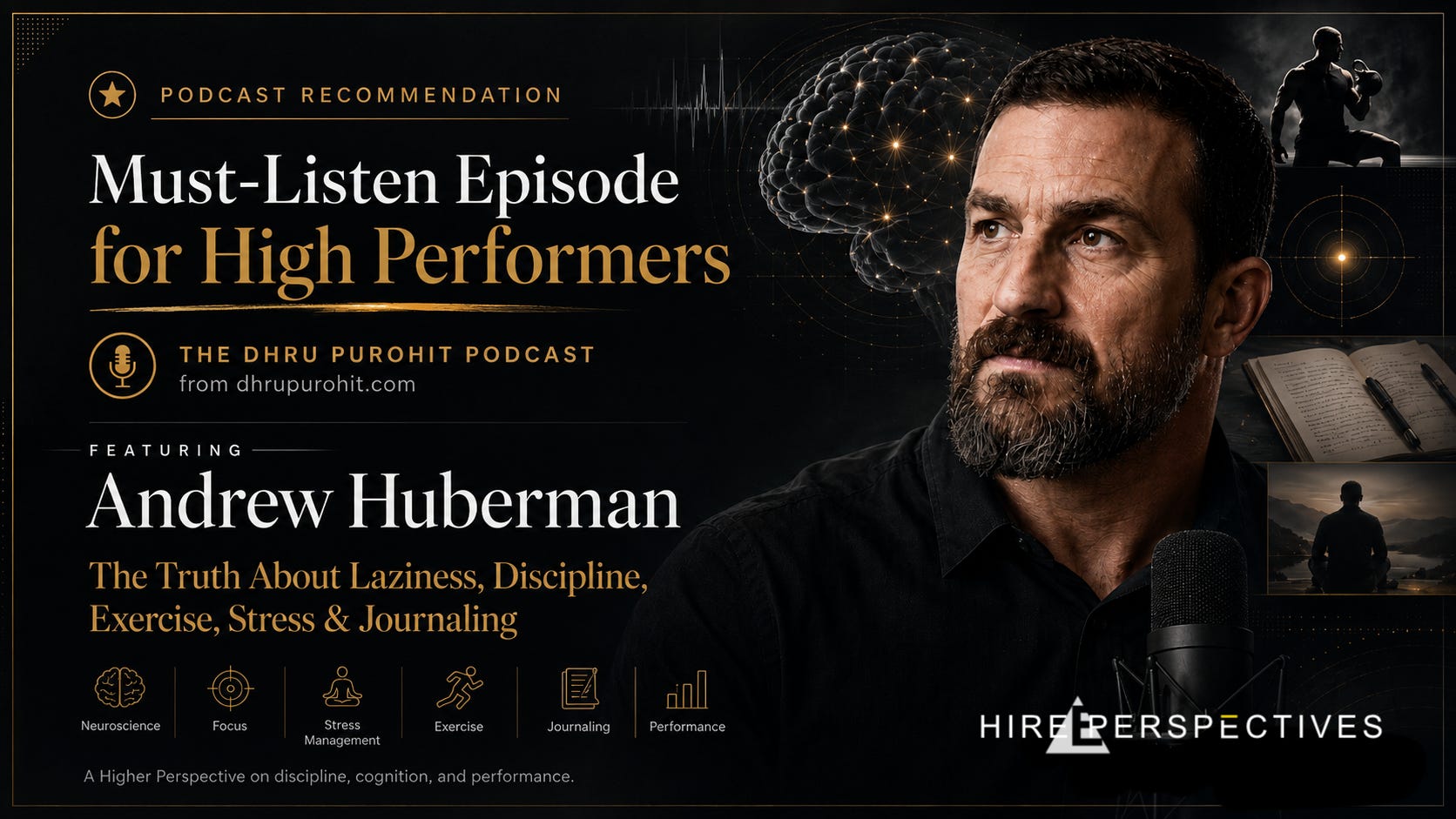
Podcast: #1 Neuroscientist: Truth About Laziness, Discipline, Exercise, Stress & Journaling | Andrew Huberman
This conversation between Dhru Purohit and Dr. Andrew Huberman belongs in the Hire Perspectives media kit because it explains something many top engineers experience but often misread: the mind does not operate separately from the body, the nervous system, the habits, or the environment.
Have a blessed day!
James Beine
#TopEngineer #HirePerspectives #EngineeringRecruitment #TalentAcquisition #EngineeringLeadership #RecruitingStrategy #EngineeringTalent
